Why should children use Atropine sulfate ophthalmic gel prior to refraction test?
- The focus power of eye muscles in children is very strong. Atropine can relax the focusing muscles and allow for a more accurate measurement of refractive error in children.
- In particular, for children with high hypermetropia or esotropia (cross-eyed), their eye muscles must be thoroughly relaxed with atropine before undergoing refraction test.
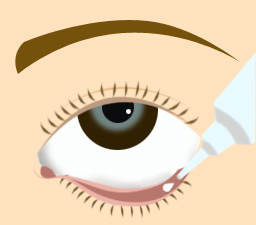
How to use Atropine sulfate ophthalmic gel?
As a result of Atropine use, eyes are dilated but generally recover in four weeks.
What are the side effects after using Atropine ophthalmic gel? How to deal with the side effects?
- Light sensitivity. Light sensitivity is caused by dilated pupils. Children may wear sunglasses to reduce such discomfort. Light sensitivity will disappear as the pupils recover.
- Blurry vision (especially for near tasks). It gradually disappears. Children can return to school, but teachers should be aware of blurred vision while reading.
- Fever, dry mouth and skin, flushing of the face and a rapid pulse may be caused by vasodilator action of Atropine. They usually disappear in about 30 minutes. Atropine should not be used more than needed, and only a dosage the size of a grain of rice should be applied. If symptoms are severe or persist, promptly seek medical attention.
- Allergic reactions. Allergic reactions are rare, but include lid swelling, itchy and red eyes. If symptoms are severe or persist, promptly seek medical attention.